
About an hour’s drive from Adelaide, Murray Bridge rarely grabs attention at a national level.
But in the final week of March, the rural city was bustling with news lovers who had flown in from around the country for the Local and Independent News Association’s (LINA) fourth annual summit.
LINA executive director Claire Stuchbery tells PIJI the event – which alternates between metro and regional locations, and this year was co-hosted by Murray Bridge News – was a rare opportunity for news publishers to learn and grow as a community.
“It helps build collaborative relationships with publishers across the country, because a lot of the publishers we’re working with … may be the only journalists working in their area ,” she says.
“So this helps build a network of people that they know, trust and can call on.
“The face-to-face element of it means that it’s an open environment for people to share their challenges and their wins.”
Stuchbery says although everyone was conscious of the significant challenges facing the news media industry, particularly regarding sustainability, the summit was also an opportunity to focus on the positives and ways forward.
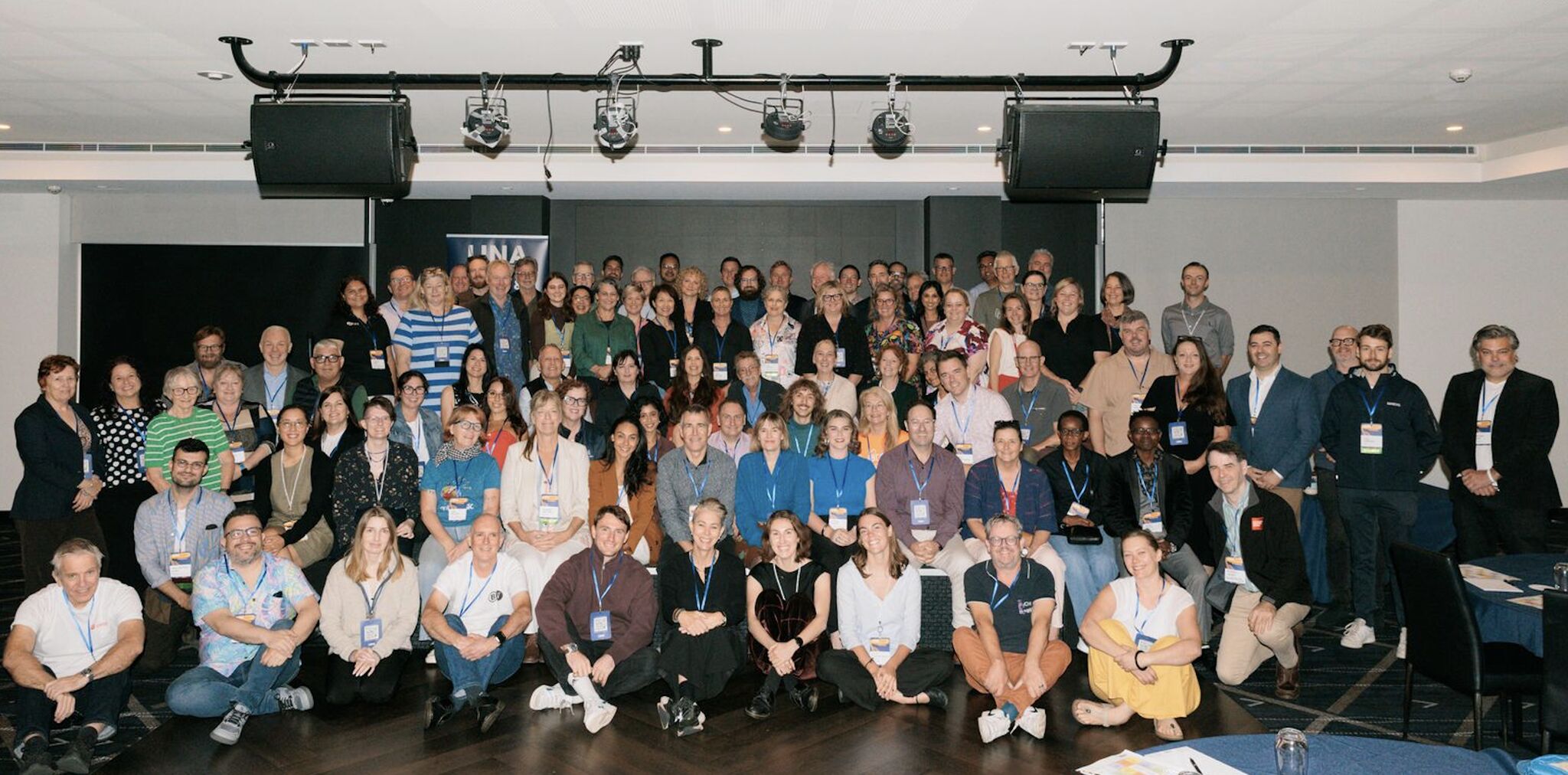
Workshops focused on topics ranging from revenue opportunities to emergency reporting, and presentations were held on everything from AI to stress management.
Over the years, Stuchbery has noticed a shift in publishers’ focus from news distribution models to how news can serve local communities.
“[This includes] not just sending people a piece of bad news because that’s going to get clicks, but more about, ‘Here’s the background thinking to it, and here’s a pathway for more information around it’, explainers, those sorts of things,” she says.
“In particular, we think around emergency preparedness and rebuild after emergency events, and we’re seeing that as an increasing common thing that newsrooms are faced with reporting on.”
Stuchbery says the newsrooms LINA works with are “very interested in their role in strengthening democracy”, and in how to use the technological tools available to them to do that.
This can include using AI for more efficiency in day-to-day management – although she says using generative AI is not of much interest given LINA members often produce “bespoke” stories for their local communities that “nobody else is telling”.
But time is the biggest barrier to growth and take-up of new tools, Stuchbery says.
Of the more than 170 newsrooms that are LINA members, she says about a third could be described as “early newsrooms, startups and people … in that solopreneur kind of space”.
Another third of memberships belong to newsrooms with less than five staff members, while the rest have been operating for “five or more years” and have built up teams.
“Everyone is aware of the need to diversify revenue streams and to seek additional income opportunities,” she says.
“But the actual physical capacity of an individual to cover a 24-hour newsroom and then also build new business models or business products that can support the sustainability of that newsroom at the same time is extremely challenging.”
“That struggle for time around the business development and sustainability piece is … one that there’s not an easy solution to right now.”
Despite challenges, there has been signs of growth in recent years.
A 2025 LINA survey found out of newsrooms which had been surveyed across multiple years, revenue increased 18 per cent from the 2024 financial year. The median annual revenue of all survey respondents was $298,000 – although some earned less than $50,000.
On 3 May, LINA launched its annual ‘Our News. Your Voice’ campaign, which brought in more than $330,000 in donations to independent newsrooms over the previous two years.
Running until 8 May, the campaign encourages donations to individual participating LINA members, and will also see any donations made to LINA be distributed to participating members.
– Sezen Bakan