
Journalists face increasing physical and financial threats at home and abroad
This month, PIJI speaks to journalists blocking out the buzz of drones and shock of nearby missile hits to report from war zones.
We also discuss how a small, independent and fully Aboriginal-owned publisher is building a sustainable future in order to continue bringing Indigenous stories and voices to mainstream audiences.
Both examples are vital to help sustain our public interest journalism sector, providing informative, truthful news for audiences who might otherwise go uninformed.
With journalists facing increasing physical and financial threats, support is needed.
This week, the government released details of the News Innovation Fund. Across two years, the second round of News MAP will disperse $31.5 million to Australian organisations working to increase news production and distribution, or support internal capacity building and commercial sustainability of Australian core news producers.
This boost is appreciated, but industry members have previously told PIJI it is still insufficient to provide the widespread support Australian news publishers need, even taking into account the $67.6 million previously allocated under the Journalism Assistance Fund.
Facing off against social media and AI tech giants to claw back audiences and preserve the future of the journalism industry is costly. But it is a worthwhile investment for any healthy democracy.
PIJI is an independent advocacy organisation. We appreciate your support. Please consider forwarding this newsletter to someone interested in the sustainability of public interest journalism and its importance to the survival of democracy.
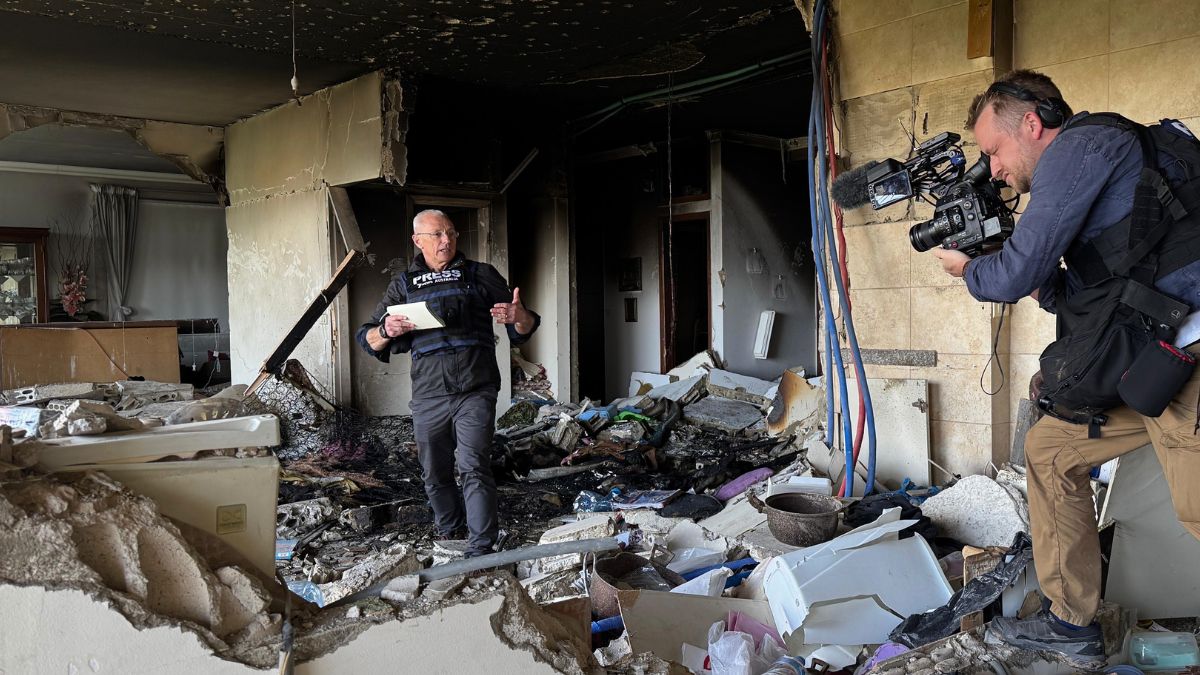
Dodging bombs and propaganda: Journalism on the frontline
Journalists Chris Reason and Kate Geraghty give insight into how they navigate politics, ethics and physical danger to report from war zones – and why.

No paywall, no problem: How the National Indigenous Times stays free and profitable
More than two decades since launching, the success of the National Indigenous Times is quietly defying industry trends.
ICYMI: Industry updates
Australia
- In the face of widespread opposition, the government dropped proposed reforms to freedom of information (FOI) law. These would have introduced new fees for FOI requests, new grounds to deny requests and a ban on anonymous requests.
Finance minister Katy Gallagher indicated the government would continue to work on reforms to ‘fix’ the FOI system she said cost almost $100 million in processing time last financial year. - Six years after Australian journalists were forced out of China amidst heightened diplomatic tensions, The Sydney Morning Herald and The Age reopened its Beijing bureau.
Nine executive editor Luke McIlveen said the bureau will “report without fear or favour what makes China such an extraordinary country”. North Asia correspondent Lisa Visentin moved from Singapore to take up the Beijing post. - Thousands of ABC staff walked off the job for 24 hours following a dispute over pay and conditions offered for a new enterprise bargaining agreement.
This marked the national broadcaster’s first strike action in 20 years.The ABC made a new offer the following week, which the MEAA said it would recommend due to improvement on key issues such as pay and progression. However, clauses protecting journalist jobs from AI reportedly remain unresolved.
The new offer will now be put to a staff vote. - The Local and Independent News Association (LINA) held a national summit in Murray Bridge, South Australia.
More than 120 publishers and industry stakeholders from around the country attended.The summit aimed to help newsrooms deal with key industry issues, including community building, sustainable scaling, emerging technologies and storytelling techniques. - A new Australian media outlet launched, but no journalists were directly involved. Instead, The Daily Perspective was fully AI-automated.
While the site was open about its AI use, Ette Media pointed out this did not erase issues such as plagiarism and the performative diversity displayed in the AI’s choice of writer personas.
The site has since ceased production, with a detailed overview of the “experiment” now available. - Australian news publishers saw ad spend drop 6.1 per cent in January compared to the same time last year, Guideline SMI data revealed.
- Entries for the 2026 SA Media Awards are open to SA media professionals for work published, broadcast, or televised from January 1 to December 31, 2025. Entries and peer nominations close April 14.
Around the World
- An American journalist, identified by medias as Shelly Kittleson, has been kidnapped in Baghdad, possibly by an Iranian-backed armed group.
CNN national security analyst Alex Plitsas, who said he was Kittleson’s US “designated point of contact”, said she had previously been warned about threats from Kataib Hezbollah.
One suspect has been arrested by Iraqi authorities, who say they are working to find the other kidnappers and secure Kittleson’s release. - At least five Lebanese journalists and media workers were killed by Israeli strikes in March; Mohammad Sherri, Hussain Hamood, Ali Shoeib, Fatima Ftouni and Mohammed Ftouni.
Israel claimed Shoeib, who was killed alongside the Ftouni siblings in a targeted attack on their vehicle, was a terrorist pretending to be a journalist. The IDF posted an image of Shoeib wearing a military uniform, which it later admitted was faked. - The Hungarian government filed criminal charges against investigative journalist Szabolcs Panyi, accusing him of spying in cooperation with a foreign state.
Panyi has extensively covered Russian influence in Hungary, and the Hungarian government has previously admitted to using Pegasus spyware to infiltrate his phone, along with those of other journalists, lawyers and an opposition politician. - Press freedom in Europe faced hundreds of attacks in 2025, a report by partner organisations of the Council of Europe’s Platform to Promote the Protection of Journalism and Safety of Journalists found.
In several countries, political interference, restrictive legislation, insufficient funding and strategic lawsuits were used to silence public service media.
The countries in Europe where media services faced the most threats included Russia, Turkiye, Georgia, Serbia and Ukraine. - Major German media company Axel Springer (owner of Politico, Business Insider and Bild) agreed to buy the UK’s Telegraph Media Group (owner of The Daily Telegraph and The Sunday Telegraph) for £575 million.
The deal comes two decades after Axel Springer’s first attempted purchase of Telegraph Media Group, and followed stiff competition for the new sale from the likes of the owner of Daily Mail. - In the US, Superhuman, the company behind writing assistant software Grammarly, is facing a class action lawsuit led by investigative journalist Julia Angwin. The issue stems from an AI tool that presented editing suggestions as if they came from established writers and editors – without seeking their consent.
Superhuman has disabled the feature while it ‘reimagines’ it. - US Federal Communications Commission (FCC) chair Brendan Carr threatened to revoke broadcasters’ licences over their coverage of the US/Israel-Iran war.The FCC is an independent agency that issues eight-year licences to broadcast stations.
Carr said reviews of licenses could be accelerated to occur before their set renewal dates, but FCC commissioner Anna Gomez said the process of early-renewal attempts “is so demanding that any effort would almost certainly fail.” - Google Search is now using AI to replace headlines. The Verge reported several of its own headlines were altered, some of which had their meaning changed in the process.
Google spokespeople told The Verge changes had been made as part of a “small” and “narrow” experiment that has not yet been approved for a fuller launch. - A policy brief from the Forum on Information and Democracy laid out steps governments could take to support news publishers struggling with the loss of ads to the digital market.
Recommendations include establishing a set-aside for government advertising in public interest journalism and strengthening the enforcement of privacy regulation. - In the UK, diversity schemes from British TV news organisations have left minority ethnic staff facing career stagnation, as well as backlash from some white colleagues who perceive them as ‘diversity hires’, according to a report commissioned by the Sir Lenny Henry Centre for Media Diversity.
Have something to share? Submit content for review to info@piji.com.au